 by
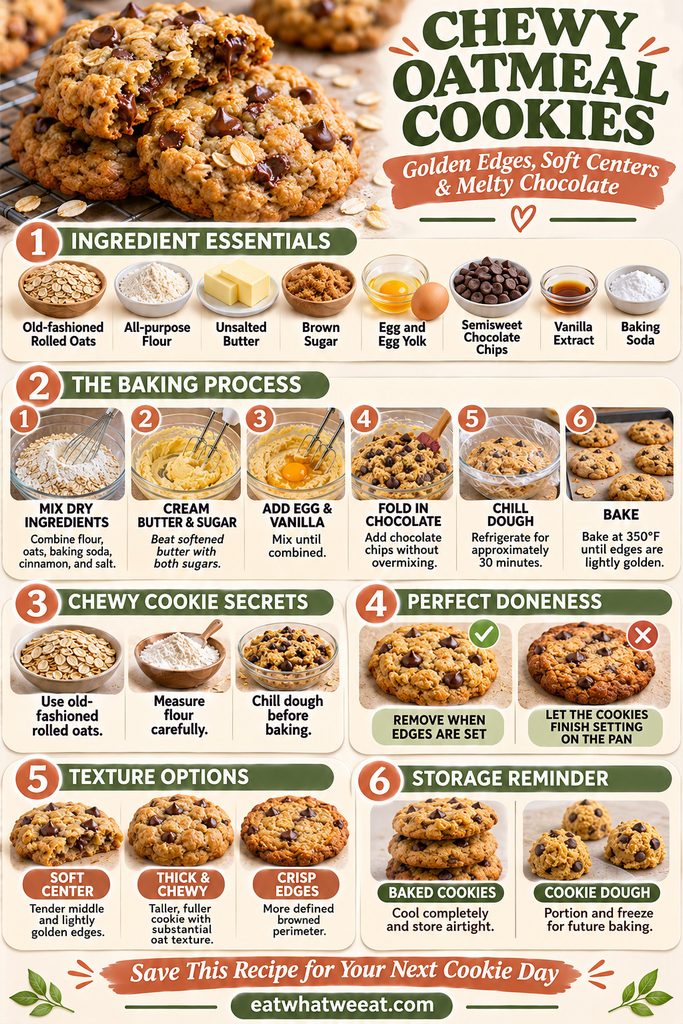
Oatmeal chocolate chip cookies bring together the cozy chew of old-fashioned oats and the familiar sweetness of chocolate chips. This version is designed for cookies with lightly golden edges, soft centers, and enough brown sugar to give the dough a warm, rich flavor. A short chill helps the cookies bake up thicker, while a little patience after baking keeps the centers tender instead of crumbly.
Quick Recipe Overview
Best starting point: Use old-fashioned rolled oats, softened butter, brown sugar, and semisweet chocolate chips. Chill the dough before baking and remove the cookies when the edges are set but the centers still look slightly soft.
Why These Oatmeal Chocolate Chip Cookies Work
Oats give the dough its signature hearty texture, while all-purpose flour provides enough structure to hold the cookies together. Brown sugar contributes moisture and a deeper sweetness; a smaller amount of granulated sugar helps the edges spread and brown. Butter carries the flavor, and vanilla rounds out the chocolate.
The goal is balance. Too much flour can make an oatmeal cookie dry and dense, while too little structure can leave it overly thin. Measuring flour with a scale is the most consistent option. If using measuring cups, fluff the flour, spoon it into the cup, and level the top instead of scooping directly from the bag.
Ingredients
- 1 cup (125 g) all-purpose flour — spooned and leveled.
- 1½ cups (135 g) old-fashioned rolled oats — not instant oatmeal.
- ½ teaspoon baking soda — helps the cookies spread and brown.
- ½ teaspoon ground cinnamon — optional, for a gentle warm note.
- ½ teaspoon fine salt — balances the sweetness.
- ½ cup (113 g) unsalted butter — softened but not greasy.
- ¾ cup (150 g) packed light brown sugar — for moisture and flavor.
- ¼ cup (50 g) granulated sugar — supports browning and spread.
- 1 large egg plus 1 egg yolk — for binding and a tender texture.
- 2 teaspoons vanilla extract — rounds out the flavor.
- 1 cup (170 g) semisweet chocolate chips — plus a few extra for the tops, if desired.
For the most recognizable oatmeal-cookie texture, choose old-fashioned rolled oats. Quick oats absorb moisture differently and create a finer, less distinct texture. Avoid steel-cut oats for this cookie dough.
How to Make Oatmeal Chocolate Chip Cookies
- Combine the dry ingredients. Whisk the flour, rolled oats, baking soda, cinnamon, and salt in a medium bowl. Set aside.
- Cream the butter and sugars. In a separate large bowl, beat the softened butter with the brown sugar and granulated sugar until creamy and evenly combined. Scrape down the bowl as needed.
- Add the egg, yolk, and vanilla. Mix until smooth. The mixture may look slightly thick; that is fine.
- Bring the dough together. Add the dry mixture to the butter mixture and stir just until no dry flour remains. Fold in the chocolate chips without overmixing.
- Chill the dough. Cover and refrigerate for about 30 minutes. This makes the dough easier to portion and helps limit excessive spreading.
- Prepare the oven and pans. Heat the oven to 350°F (175°C). Line baking sheets with parchment paper.
- Portion and bake. Scoop the dough into rounded portions, spacing them about 2 inches apart. Bake for 10–12 minutes, until the edges are set and lightly golden while the centers still look a little soft.
- Let them set. Leave the cookies on the baking sheet for 5 minutes, then transfer them to a wire rack to cool.
Ovens and portion sizes vary, so use the visual cues as well as the timer. If the cookies are small, begin checking earlier. Larger portions may need a little longer.
Tips for Soft, Chewy Cookies
- Start with room-temperature butter. Softened butter should give slightly when pressed but should not look melted or oily.
- Do not overmeasure the flour. Too much flour is a common reason cookies turn out dry or cakey.
- Keep the oats distinct. Old-fashioned rolled oats give the dough a more noticeable chew than instant oats.
- Chill before baking. A short rest firms the butter and makes the dough easier to handle.
- Watch the centers. The cookies continue to set on the hot baking sheet, so they do not need to look completely firm in the oven.
- Finish with a few chips. Pressing a few extra chocolate chips onto the dough portions makes the tops look especially inviting.
How to Adjust the Texture
For thicker cookies
Chill the dough thoroughly and portion it into taller mounds. Make sure the butter is softened rather than melted. If your kitchen is warm, return the portioned dough to the refrigerator while the oven finishes heating.
For softer centers
Remove the cookies when the edges look set and the centers still appear slightly underbaked. Let them rest on the baking sheet before moving them. Leaving them in the oven until the centers look completely firm can make the finished cookies drier.
For more golden, crisp edges
Use a light-colored baking sheet and avoid crowding the dough portions. A little more spread exposes more of the cookie to the hot pan, helping the edges become more defined. Check the bottoms near the end of baking.
Easy Variations to Try
- Dark chocolate: Replace some or all of the semisweet chips with chopped dark chocolate.
- Chocolate chunks: Use roughly chopped chocolate for larger, irregular pockets.
- Walnuts or pecans: Fold in a modest handful of chopped nuts for crunch.
- Sea salt finish: Add a small pinch of flaky salt to the tops just before baking.
- Maple note: Use a little maple flavoring or serve with a maple-inspired dessert spread; avoid adding extra liquid to the dough without adjusting the recipe.
- Cinnamon: Keep the optional cinnamon for a warmer, old-fashioned oatmeal-cookie flavor.
For the first batch, it is worth making the base recipe as written. Once you know how it spreads in your oven, change one add-in at a time so you can see how each variation affects the finished cookie.
Make-Ahead, Storage, and Freezing
The dough can be mixed ahead and chilled, covered, before baking. If it becomes very firm in the refrigerator, let it sit briefly at room temperature until it is easy to scoop. You can also portion the dough and freeze the unbaked portions on a tray before transferring them to a freezer-safe container.
Store baked cookies only after they have cooled completely. Keep them in an airtight container at room temperature. For longer storage, freeze the cooled cookies in a sealed container with parchment between layers. Thaw at room temperature before serving.
Common Cookie Troubleshooting
The butter may have been too warm, or the dough may not have chilled long enough. Chill the next tray before baking.
Check flour measurement and baking time. Spoon and level flour, and remove cookies while the centers still look soft.
Check that the flour was not packed into the cup. Let chilled dough sit briefly if it is too firm to spread.
Try a lighter baking sheet and bake one tray at a time in the center of the oven.
Quick Baking Checklist
- Use old-fashioned rolled oats.
- Measure flour carefully.
- Soften butter without melting it.
- Whisk the dry ingredients before combining.
- Stop mixing once the flour disappears.
- Fold in the chocolate chips gently.
- Chill the dough for about 30 minutes.
- Line the baking sheet with parchment.
- Leave space between dough portions.
- Check the edges before the centers look fully done.
- Rest cookies on the pan before transferring.
- Cool completely before storing.
Frequently Asked Questions
Can I use quick oats instead of old-fashioned oats?
Old-fashioned rolled oats are the better choice for this version because they give the cookies a more distinct oat texture. Quick oats can make the dough finer and softer, so the finished texture will be different.
Do I have to chill the dough?
The short chill is recommended. It firms the butter, makes the dough easier to portion, and helps the cookies keep a thicker shape. If you skip it, expect the cookies to spread more readily.
Why do the cookies look underbaked in the middle?
They are meant to come out while the centers still look a little soft. The hot baking sheet continues cooking them as they rest. Give them several minutes before deciding they need more oven time.
Can I use chocolate chunks instead of chips?
Yes. Chopped chocolate works in place of chocolate chips. The pieces will be less uniform and may create larger melted pockets throughout the cookies.
How should I freeze the cookie dough?
Portion the dough first, freeze the portions on a lined tray until firm, and then move them to a freezer-safe container. Bake from chilled or frozen dough, allowing extra time as needed and checking for the same visual doneness cues.
These oatmeal chocolate chip cookies are at their best when the edges are lightly golden and the centers stay tender. Keep the rolled oats, brown sugar, and chocolate in balance, and use the first tray to learn how your oven handles the dough. Once you have the base texture where you like it, the same dough is an easy starting point for chunks, nuts, or a little flaky salt.
Oatmeal Chocolate Chip Cookie Inspiration
Explore different textures, shapes, chocolate styles, and serving ideas before choosing the look you want for your next batch.
Classic Thick Oatmeal Chocolate Chip Cookies

Source: Pinterest
Visual topic: Thick, golden cookies with visible oats and chocolate chips.
The generous, rounded shape gives these cookies a substantial bakery-style look. Rolled oats remain visible throughout the dough, while chocolate chips create dark pockets across the golden surface.
A thicker cookie offers a soft middle with enough structure to hold its shape. The contrast between hearty oats and sweet chocolate makes the familiar chocolate chip cookie feel a little more substantial.
For a similar look, portion the dough into taller mounds rather than flattening it. Leave space between portions so the edges can spread without running together.
Golden Cookies With Melty Chocolate

Source: Pinterest
Visual topic: Warm, golden cookies with melted chocolate.
A warm cookie lets the chocolate look soft and glossy against the toasted oat texture. The lightly browned edges provide a visual cue that the cookies have baked through while the centers remain tender.
Serving them slightly warm highlights the contrast between crisp edges and a softer center. It is an inviting presentation for an afternoon snack or a casual dessert plate.
Let the cookies rest on the baking sheet briefly before moving them. This gives the centers time to set while preserving the soft texture.
Loaded Oatmeal Chocolate Chip Cookies

Source: Pinterest
Visual topic: A generously filled cookie with chocolate throughout.
This loaded version leans into a generous mix of oats and chocolate, giving each cookie plenty of visible texture. The uneven distribution makes the cookies look homemade rather than machine-uniform.
A fuller mix-in ratio creates a more chocolate-forward bite while keeping the oat base noticeable. It suits readers who want a classic cookie with a little extra in every portion.
Fold the chips in at the end and reserve a few to press onto the dough balls before baking. That small finishing step makes the chocolate visible on top.
Rustic Homemade Oatmeal Cookies

Source: Pinterest
Visual topic: Craggy tops, toasted edges, and an oat-forward texture.
The irregular tops and gently spread edges give these cookies a relaxed, homemade appearance. Oats are easy to spot, so the oatmeal identity is clear even before the first bite.
A rustic finish is appealing when you want cookies that look generous and homemade rather than perfectly identical. Small differences in shape make a batch feel personal.
Use a cookie scoop for even portions, then leave the tops naturally textured. Avoid pressing every mound completely flat if you prefer a thicker center.
Soft-Centered Chocolate Chip Oatmeal Cookies

Source: Pinterest
Visual topic: Tender centers with chocolate chips near the surface.
The visual emphasis here is the soft center, with chocolate chips sitting close to the surface and oats woven through the dough. The edges provide just enough golden color to frame the middle.
A soft center is especially satisfying alongside a glass of milk or a cup of coffee. It also makes these cookies a good choice for anyone who prefers a tender cookie over a crisp one.
Take the cookies out when the edges look set and the centers still appear slightly underdone. Allow carryover heat and cooling time to finish setting them.
Chewy Oatmeal Chocolate Chip Cookies

Source: Pinterest
Visual topic: A close-up of chewy oat-and-chocolate texture.
The close view draws attention to the dense, textured crumb, with oats and chocolate distributed through each cookie. The surface looks soft rather than thin or brittle.
Chewiness is the defining appeal of an oatmeal cookie. Brown sugar, a well-balanced dough, and avoiding excess baking all help create the tender bite readers often look for.
Measure flour carefully and avoid baking until the centers look completely firm. A short cooling period on the pan helps the cookie finish without drying out.
Chocolate-Studded Oatmeal Cookies

Source: Pinterest
Visual topic: Chocolate chips scattered across an oat-rich cookie.
The chocolate chips are prominent against the oatmeal dough, making the mix-ins the first thing the eye notices. A few chips on the surface help distinguish each cookie.
This approach is useful for readers who want a consistent chocolate hit rather than a cookie where the chips disappear into the dough. It keeps the classic flavor combination front and center.
Use regular semisweet chips for familiar pockets of chocolate, or mix in a small amount of chopped chocolate for varied-size pieces.
Thick Oatmeal Chocolate Chip Cookies

Source: Pinterest
Visual topic: Rounded, thick cookies with a soft-looking middle.
The tall profile makes these cookies look substantial, with a lightly browned exterior and a center that appears tender. Their shape is a useful reference for portioning dough.
Thicker cookies are a good fit when you prefer a soft middle and a more generous dessert. Their size also makes them easy to serve individually on a dessert plate.
Chill the dough before baking and shape portions into slightly taller mounds. If the first tray spreads more than expected, chill the remaining dough longer.
Oatmeal Chocolate Chip Cookie Stack

Source: Pinterest
Visual topic: A small stack showing the cookies' thickness.
Stacking the cookies makes their thickness and layered edges easy to see. The arrangement turns a simple batch into a shareable dessert presentation without adding elaborate styling.
A stack works well for a dessert table, bake sale, or casual gathering because it shows the batch as a group. It also gives a quick sense of the cookie's size and texture.
Choose cookies that have cooled enough to hold their shape before stacking. Add a few loose chocolate chips nearby for a simple, natural serving scene.
Soft and Chewy Cookie Close-Up

Source: Pinterest
Visual topic: A close crop of a tender cookie with visible oats.
The close crop highlights the contrast between the soft interior, toasted surface, and small oat flakes. Chocolate pieces create dark accents that break up the golden color.
Texture-focused photos help readers decide whether a recipe matches their preference. This one communicates a tender, chewy style rather than a thin, crisp cookie.
For a similar result, keep the dough from becoming too dry and watch the final minutes of baking closely. Slightly soft centers firm as the cookies cool.
Chocolate Chunk Oatmeal Cookies

Source: Pinterest
Visual topic: Roughly chopped chocolate among rolled oats.
Larger chocolate pieces create irregular pools and edges instead of the uniform dots made by standard chips. The oats add a visibly hearty texture around those pieces.
Chocolate chunks give each cookie a varied bite: some areas have a small amount of chocolate, while others contain a larger melted piece. It is a simple way to change the appearance without changing the basic cookie format.
Chop a chocolate bar into a mix of small and medium pieces. Keep some shards for the tops, and fold the rest through the dough gently.
Classic Oatmeal Cookie Batch

Source: Pinterest
Visual topic: A simple batch of round homemade cookies.
A full batch arranged together communicates an approachable, everyday bake. The consistent golden color and familiar round shape make the cookies easy to recognize.
This style is practical when baking for a household or sharing with friends. A batch also gives readers a useful visual reference for portion size and how the cookies look once baked.
Use a scoop to keep portions close in size so the cookies bake at a similar rate. Rotate the pan if your oven browns one side more quickly.
Oatmeal Chocolate Chip Cookies on a Plate

Source: Pinterest
Visual topic: Cookies arranged on a plate for sharing.
The plate presentation keeps the focus on the cookies themselves, with their golden edges and visible chocolate. It is an uncomplicated way to show how the finished batch might be served.
A simple plate makes the recipe feel accessible for everyday occasions. There is no need for special props when the texture and chocolate already make the cookies inviting.
Serve a few cookies on a small plate with coffee, tea, or milk. For a gathering, arrange them in a loose overlapping circle so guests can easily take one.
Easy Chocolate Chip Oatmeal Cookies

Source: Pinterest
Visual topic: A familiar cookie shape with visible oats and chips.
The straightforward appearance reflects the appeal of an easy homemade cookie: round portions, lightly browned edges, and chocolate chips throughout. Nothing about the presentation feels overly elaborate.
An uncomplicated cookie is useful when you want a dependable dessert without a complicated decorating step. The flavor comes from the oat, butter, brown sugar, and chocolate combination.
Keep the ingredient setup simple and measure everything before mixing. That makes the process easier to follow and helps prevent overmixing once the flour and oats are added.
Oatmeal Cookies With Chocolate Pockets

Source: Pinterest
Visual topic: A broken or cut cookie revealing chocolate inside.
A broken cookie can reveal how the chocolate is distributed through the crumb. The visible interior also gives a better sense of the oats and the cookie's thickness than a top-down view alone.
Showing the inside helps readers understand the texture they can expect. It is particularly useful when the goal is a soft, chewy cookie with chocolate in more than just the surface.
Allow the cookies to cool enough to hold together before breaking one open for serving. For photographs, a clean break can show the crumb without crushing it.
Soft Oatmeal Chocolate Chip Cookies

Source: Pinterest
Visual topic: Soft-looking cookies with rounded edges.
The rounded shape and gentle golden color suggest a tender style. Chocolate chips remain visible, while the oat flecks give the surface a little texture.
Soft cookies are easy to enjoy on their own and travel well in a lunchbox or snack container once fully cooled. Their familiar flavor also makes them a crowd-friendly option.
Store completely cooled cookies in an airtight container. If you are preparing them ahead, freeze baked cookies in a single layer before transferring them to a freezer-safe container.
Chewy Oatmeal Cookies With Golden Edges

Source: Pinterest
Visual topic: Golden rims surrounding a softer center.
The browned outer ring contrasts with a lighter center, creating a clear visual impression of crisp edges and a chewy middle. Chocolate chips add darker points across the surface.
That edge-to-center contrast gives a cookie more than one texture in a single bite. It is a helpful target if you like cookies that are not uniformly soft or crunchy.
Bake until the outer edges look set but the middle is still a little soft. Let the cookies rest on the hot pan before transferring them to a rack.
Oatmeal Chocolate Chip Cookies for Sharing

Source: Pinterest
Visual topic: Several cookies arranged as a shareable batch.
The group arrangement emphasizes quantity and a casual, shareable feel. Repeating the same cookie shape creates a cohesive batch while the individual tops retain their homemade character.
This presentation suits potlucks, family gatherings, and informal dessert spreads. It makes the cookies feel easy to portion and pass around without needing a plated dessert setup.
For a neat serving tray, let the cookies cool fully and arrange them in a single layer. Add parchment between layers if you need to stack them for transport.
Brown Sugar Oatmeal Cookie Style

Source: Pinterest
Visual topic: Deep golden cookies with a warm brown-sugar hue.
The deeper golden tone gives the cookies a warm, caramel-like appearance. Oats and chocolate provide texture, while the browned edges add visual depth.
Brown sugar is a natural partner for oats and chocolate because its molasses notes bring warmth to the cookie. It is a useful flavor direction for anyone who likes a richer, less plain sweetness.
Use packed brown sugar as measured in the recipe. Keep the dough balanced rather than adding extra sugar, which can change how much the cookies spread.
Bakery-Style Oatmeal Chocolate Chip Cookies

Source: Pinterest
Visual topic: Large, rounded cookies with a generous look.
The larger rounded portions create a bakery-inspired presentation. Their visible oats and chocolate chips make the flavor clear, while the thicker shape suggests a substantial cookie.
A bakery-style cookie can feel special without icing or decoration. The size and texture do most of the work, making this a strong option for a dessert platter or homemade treat box.
If making larger portions, keep them consistent and check the centers before removing the tray. Larger cookies may need a little more time than smaller scoops.
Oatmeal Chocolate Chip Cookies With Crisp Edges

Source: Pinterest
Visual topic: Cookies with a more defined, browned perimeter.
The defined edges give these cookies a slightly crisper appearance, while the centers retain the oatmeal-and-chocolate texture. The contrast makes the surface look varied rather than uniformly soft.
A little extra edge color appeals to readers who enjoy a cookie with some structure. It can also make the cookies easier to handle once they have cooled.
For more edge color, avoid crowding the pan and allow the cookies to spread naturally. Watch closely near the end so the bottoms do not become too dark.
Chocolate Chip Oatmeal Cookie Variation

Source: Pinterest
Visual topic: A classic oat cookie with chocolate throughout.
This familiar variation keeps the main elements uncomplicated: oats, chocolate chips, and a golden cookie base. It is a useful visual example of the recipe's core flavor combination.
A classic variation is a good starting point before experimenting with add-ins. It lets the oat and chocolate flavors remain the focus rather than competing with several extra ingredients.
Once comfortable with the base dough, try one small change at a time, such as swapping some chips for chunks. Keeping additions modest helps preserve the cookie's structure.
Oatmeal Chocolate Chip Cookies, Fresh From the Oven

Source: Pinterest
Visual topic: Warm cookies with a just-baked finish.
The fresh-baked look is defined by warm color, soft centers, and chocolate that still appears glossy. A few natural cracks across the tops make the batch feel homemade.
Fresh from the oven is when the aroma and soft texture are most inviting, but the cookies need a short rest to become stable enough to lift. That brief pause is part of the baking process.
Leave the cookies on the baking sheet for several minutes, then move them to a cooling rack. This keeps the bottoms from steaming while the centers finish setting.
Brown Butter Oatmeal Chocolate Chip Cookies

Source: Pinterest
Visual topic: Golden cookies with a deeper, toasted color.
The toasted color suggests a richer cookie style, with oats and chocolate complementing the deeper buttery notes. This is a distinct flavor direction from a lighter, classic dough.
Brown butter can add a nutty aroma and a more complex flavor. It is a useful variation for bakers who want to build extra depth into a familiar oatmeal chocolate chip cookie.
If using brown butter, cool it before mixing so it does not melt the sugars or scramble the egg. The recipe proportions may need adjustment when adapting a separate brown-butter formula.
Oatmeal Cookies With a Sea Salt Finish

Source: Pinterest
Visual topic: Golden oatmeal cookies with a light flaky-salt finish.
A restrained sprinkle of flaky salt adds tiny pale accents to the cookie tops, contrasting with the golden dough and dark chocolate. The finish is subtle rather than heavily decorated.
A little salt can sharpen the flavor contrast between sweet chocolate and the warm oat base. It is a finishing touch for readers who enjoy a sweet-and-salty dessert profile.
Sprinkle a small pinch over each dough portion just before baking. Use flaky salt sparingly so it complements the cookie instead of overwhelming it.
For more cozy baking inspiration and homemade cookie ideas, follow @eatwhatweeatrecipes on Pinterest.