 by
Instant Pot beef stew brings the cozy flavor of a classic homemade dinner to the pressure cooker, with tender beef chuck, potatoes, carrots, and a rich herb-scented gravy. This easy method builds flavor by browning the meat first, then lets the pressure cooker do the slow-tenderizing work while you get on with the rest of your evening.
Instant Pot Beef Stew at a Glance
- Best cut: Beef chuck, cut into generous 1½-inch pieces.
- Pressure setting: High pressure for about 35 minutes.
- Release: Let the pressure release naturally for 10 minutes, then release any remaining pressure carefully.
- Vegetables: Potatoes, carrots, onion, and optional peas.
- Finish: Thicken the broth after cooking for a hearty, spoon-coating gravy.
- Flavor: Garlic, tomato paste, thyme, bay leaf, Worcestershire, and black pepper.
Good to know: The cooker needs time to come to pressure and release pressure, so plan for roughly 75–90 minutes from prep to serving. The active work is much shorter.
Why Beef Chuck Works So Well
Beef chuck is a dependable choice for pressure cooker beef stew because it has enough connective tissue to become tender during moist cooking. As it cooks, that connective tissue softens and gives the broth a fuller body. Leaner cuts can become dry or firm before they develop the same stew-like texture.
Look for boneless chuck roast and cut it into evenly sized pieces. Pre-cut stew meat is convenient, but the pieces can come from different cuts and may vary in size. If you use it, check for tenderness before serving and add a few more minutes under pressure if needed.
Ingredients for a Classic Instant Pot Beef Stew
- 2½ pounds beef chuck: Cut into 1½-inch cubes and patted dry.
- 1½ teaspoons kosher salt and ¾ teaspoon black pepper: For seasoning the beef.
- 2 tablespoons olive oil: For browning in batches.
- 1 large yellow onion: Diced.
- 3 carrots: Peeled and cut into thick pieces.
- 2 celery ribs: Sliced.
- 3 garlic cloves: Minced.
- 2 tablespoons tomato paste: Adds savory depth and color.
- 3 cups beef broth: Choose a broth you enjoy; lower-sodium broth gives you more control.
- 1 tablespoon Worcestershire sauce: Check the label if you need a specific dietary version.
- 1 teaspoon dried thyme, 1 bay leaf, and ½ teaspoon smoked or sweet paprika: For a warm, savory base.
- 1½ pounds Yukon Gold or red potatoes: Cut into large chunks.
- 1 cup frozen peas (optional): Stirred in after pressure cooking.
- 1½ tablespoons cornstarch mixed with 2 tablespoons cold water: For thickening, as needed.
- Chopped parsley: Optional, for serving.
This version is made without wine and without dairy. For a red-wine variation, replace ½ cup of the broth with dry red wine and briefly simmer it after deglazing. For a gluten-free version, check the broth, Worcestershire sauce, and seasonings, and use a cornstarch thickener labeled gluten-free.
How to Make Tender Beef Stew in the Instant Pot
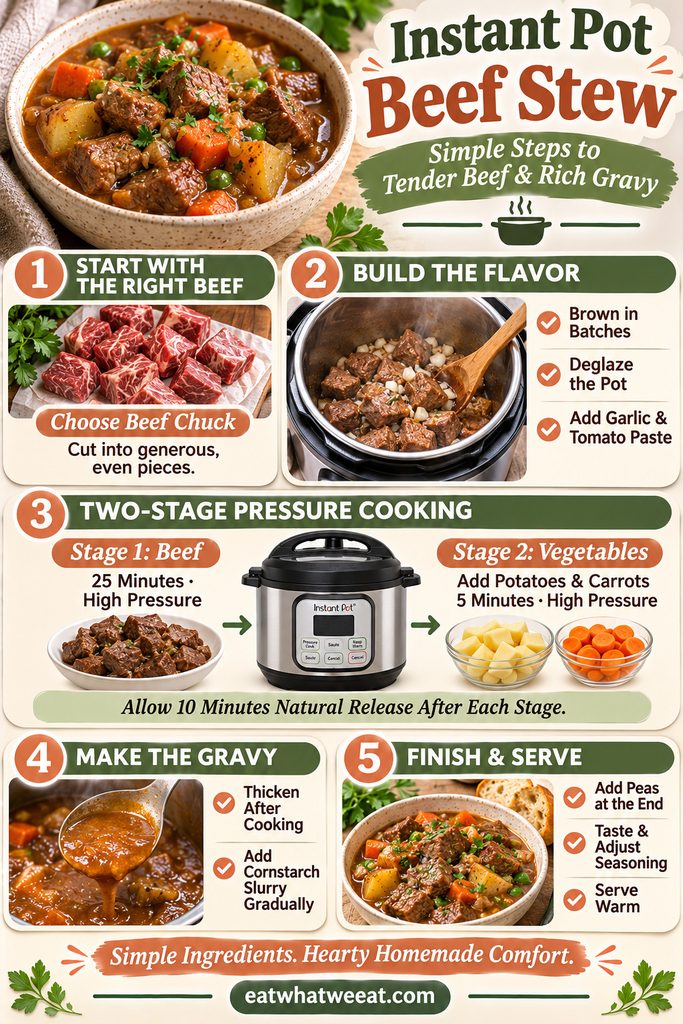
1. Season and brown the beef
Pat the beef dry, then season it with salt and pepper. Select Sauté and heat the olive oil. Brown the beef in batches, turning the pieces so several sides develop a deep brown crust. Transfer each batch to a plate. Avoid crowding the pot; if the beef releases liquid and steams, work in smaller batches.
2. Build the savory base
Add the onion and celery to the pot and cook until they begin to soften. Stir in the garlic and tomato paste and cook briefly. Pour in a splash of broth and scrape the bottom thoroughly with a wooden spoon to loosen the browned bits. This step helps prevent a burn warning and carries the seared flavor into the gravy.
3. Pressure-cook the beef
Return the browned beef and any accumulated juices to the pot. Add the remaining broth, Worcestershire sauce, thyme, bay leaf, and paprika. Stir, lock the lid, set the valve according to the manufacturer’s instructions, and cook on High Pressure for 25 minutes. This first stage gives the beef a head start before the vegetables are added.
4. Add potatoes and carrots
When the first cook ends, allow a 10-minute natural release, then carefully release any remaining pressure. Open the lid only after the pressure indicator has dropped. Add the potatoes and carrots, stir gently, and make sure the pieces are mostly nestled in the liquid. Lock the lid and cook on High Pressure for 5 minutes.
5. Finish the gravy and vegetables
When the second cook ends, release the pressure carefully. Check that the beef is fork-tender and the vegetables are cooked to your liking. Remove the bay leaf. Select Sauté and bring the liquid to a gentle simmer. Stir in the cornstarch slurry a little at a time until the gravy reaches the thickness you like. Add the peas, if using, and simmer briefly until warmed through.
6. Taste and serve
Taste before adding more salt; broth and Worcestershire brands vary in sodium. Finish with black pepper and parsley. Serve in warm bowls with crusty bread, biscuits, or a simple green salad.
Timing note: Pressure cookers vary, and the size and shape of beef pieces affect tenderness. If the meat is still chewy, cook it under pressure for another 5 minutes and check again. Do not judge tenderness only by the programmed time.
Tips for Thick, Flavorful Beef Stew
- Dry the beef before searing. Surface moisture makes browning harder.
- Brown in batches. Give the pieces room so they sear instead of steam.
- Deglaze carefully. Scrape up every browned bit before pressure cooking.
- Use large vegetable pieces. Bigger chunks are less likely to fall apart.
- Keep the peas for the end. They need only a short warm-through.
- Thicken after pressure cooking. A slurry gives you control and avoids a floury taste.
- Season at the end. The broth concentrates as the gravy simmers.
If you prefer a looser broth, use less slurry or skip it altogether. For a thicker, old-fashioned gravy, add the slurry gradually and let the stew simmer for a minute between additions. The sauce will thicken slightly more as it cools.
Easy Ways to Change the Recipe
Instant Pot beef stew without wine
The base recipe uses beef broth instead of wine, so there is no need to make a separate substitution. Add an extra spoonful of tomato paste or a splash of Worcestershire if you want a deeper savory note.
Beef stew with red wine
Replace about ½ cup of the broth with dry red wine. After sautéing the onion and tomato paste, pour in the wine and simmer briefly while scraping the bottom of the pot. Add the remaining broth before pressure cooking.
Gluten-free or dairy-free beef stew
The recipe contains no dairy and uses cornstarch rather than flour for thickening. For gluten-free cooking, verify every packaged ingredient, especially broth, Worcestershire sauce, and spice blends. Ingredient labels can differ by brand.
Low-carb or keto-style beef stew
Leave out the potatoes and add more mushrooms, celery, or green beans. Add quick-cooking vegetables near the end so they keep their texture. Use a small amount of a suitable thickener or serve the stew with a more broth-like consistency.
Beef stew with mushrooms
Brown sliced mushrooms separately for deeper flavor, then stir them into the finished stew. You can also add larger mushroom pieces with the vegetables, keeping in mind that they shrink as they cook.
Using frozen stew meat
Frozen beef can be pressure-cooked, but it will not brown as well and pieces may be stuck together. Separate the pieces as much as possible, allow for a longer time to reach pressure, and check tenderness before serving. For the most developed flavor, thaw the beef safely in the refrigerator and brown it first.
What to Serve With Beef Stew
Because the stew already includes beef and vegetables, simple sides are usually enough. Crusty sourdough, dinner rolls, or buttermilk biscuits are useful for soaking up the gravy. A crisp green salad, steamed green beans, or roasted Brussels sprouts add freshness alongside the rich broth.
For a heartier spread, serve smaller bowls with a side of mashed cauliflower or buttered noodles. If you are serving a crowd, keep toppings simple: chopped parsley, freshly cracked pepper, and a basket of bread let the stew stay at the center of the meal.
Storage, Reheating, and Freezing
Cool leftovers promptly and refrigerate them in a covered container. For best quality, use refrigerated stew within 3 to 4 days. The gravy may thicken in the refrigerator; loosen it with a splash of broth or water when reheating. Warm gently on the stovetop or in the microwave, stirring so the center heats evenly.
Beef stew can also be frozen in meal-size portions. Leave a little room in each container for expansion and label it with the date. Thaw overnight in the refrigerator before reheating. Potatoes can become softer after freezing and thawing, so if you are planning a freezer batch, you may prefer to freeze the beef and gravy separately and add freshly cooked potatoes later.
Quick Troubleshooting Guide
- Beef is still chewy: Return it to High Pressure for another 5 minutes, then check again.
- Gravy is too thin: Simmer on Sauté and add a little more cornstarch slurry.
- Gravy is too thick: Stir in warm broth a few tablespoons at a time.
- Potatoes are falling apart: Cut larger pieces or add them during a shorter second pressure cycle.
- Bottom of the pot has browned bits: Deglaze thoroughly before sealing the lid.
- Flavor tastes flat: Add black pepper, a little salt, or a small splash of Worcestershire after tasting.
Frequently Asked Questions
How long should beef stew cook in an Instant Pot?
For this method, cook the beef for 25 minutes on High Pressure, add the potatoes and carrots, then cook for another 5 minutes. Allow a 10-minute natural release after each cycle before releasing remaining pressure. The exact time needed for tenderness depends on the size and cut of the beef.
Why is my Instant Pot beef stew meat tough?
Beef chuck needs enough moist cooking time for its connective tissue to soften. If the pieces are still chewy, they likely need more time. Add 5 minutes at High Pressure and check again.
Can I put raw beef and vegetables in the Instant Pot together?
You can, but browning the beef first builds a deeper flavor. For better vegetable texture, this recipe cooks the beef first and adds the potatoes and carrots for a shorter second cycle.
How do I thicken beef stew without flour?
Mix cornstarch with cold water to make a smooth slurry, then stir it into the simmering stew after pressure cooking. Add it gradually until the gravy is as thick as you like.
Can I make Instant Pot beef stew ahead?
Yes. Refrigerate the cooled stew in a covered container and reheat it gently. The flavors settle as it rests, and you can loosen the gravy with a little broth when warming it.
A good Instant Pot beef stew depends on a few simple choices: beef chuck, a proper sear, enough pressure-cooking time, and a final adjustment to the gravy. Keep the classic potatoes and carrots or try one of the variations, then serve it warm with bread and something fresh on the side.
A little more inspiration
25 Instant Pot Beef Stew Ideas to Explore
From classic potatoes and carrots to broth-forward, gluten-free, and flavor-inspired variations, these examples offer different ways to think about a comforting pressure-cooker dinner.
Classic Beef Stew With Rich Gravy

A traditional pressure-cooker bowl brings together browned beef, potatoes, carrots, and a savory gravy. The familiar combination keeps the focus on tender chunks of beef and vegetables rather than an elaborate list of add-ins.
The appeal is its balance: hearty pieces, a spoonable sauce, and straightforward flavors that feel right for a family dinner. Browning the beef first gives the finished broth a deeper, roasted foundation.
For a classic version, keep the vegetable cuts fairly large so they hold their shape during pressure cooking. Finish with a little parsley and serve with crusty bread for catching the gravy.
Easy Weeknight Pressure Cooker Stew

This take centers on the practical promise of an Instant Pot dinner: familiar stew ingredients cooked together in one appliance. Beef, potatoes, and carrots make the meal recognizable without requiring a complicated ingredient list.
A pressure cooker shortens the hands-on portion of a slow-simmered favorite. Once the beef is browned and the pot is sealed, the cooking happens with little attention from the cook.
Prep the vegetables while the beef browns, and measure the broth and seasonings before pressure cooking. That small bit of organization makes the recipe easier to manage on a busy evening.
Tender Beef With Potatoes And Carrots

Potatoes and carrots are the classic partners for stew beef. Their mild sweetness and soft, hearty texture complement the savory cooking liquid, while the beef provides the rich center of the meal.
This combination is especially satisfying because each spoonful can include meat, vegetables, and gravy. It is a complete-feeling dinner that does not need many side dishes.
Cut the potatoes and carrots into generous, even pieces. If you prefer firmer vegetables, pressure-cook the beef first and add the vegetables for a shorter second cook.
Gluten-Free Beef Stew Inspiration

A beef stew can be built around meat, vegetables, broth, and herbs without relying on wheat flour. The thick texture can come from a carefully reduced cooking liquid or a cornstarch slurry labeled gluten-free.
This approach is useful for cooks who want the familiar comfort of stew while avoiding traditional flour-based thickening. Always check broth, Worcestershire sauce, and packaged seasonings for ingredient suitability.
Keep the base simple, then thicken only after pressure cooking. Mix the starch with cold water before stirring it into the hot liquid to help prevent lumps.
Carrot-Forward Homemade Beef Stew

Carrots bring color and gentle sweetness to a savory beef stew. Paired with chunks of beef and a dark, seasoned broth, they create a familiar combination that feels substantial without being fussy.
A carrot-forward version is a good fit when you want vegetables to be more than a background ingredient. Their sweetness rounds out the tomato, garlic, and herbs in the cooking liquid.
Use thick carrot pieces rather than thin coins so they remain distinct after pressure cooking. Add a handful of chopped fresh herbs just before serving to brighten the rich broth.
Dairy-Free Pressure Cooker Stew

Beef stew is naturally easy to prepare without milk, cream, or butter. Olive oil can be used for browning, while beef broth, onions, garlic, and herbs build a full savory base.
Leaving out dairy keeps the flavor focused on the browned meat and vegetables. A glossy broth can still feel satisfying when it is reduced slightly or thickened with a suitable starch.
Choose a dairy-free broth and check packaged ingredients such as Worcestershire sauce. For a richer finish, stir in a small splash of olive oil rather than cream.
Old-Fashioned Beef Stew, Pressure Cooker Style

This version takes its cues from a stovetop or Dutch oven beef stew: browned beef, onion, carrots, potatoes, tomato, and herbs. The pressure cooker changes the method while keeping the flavor profile familiar.
The contrast is what makes it appealing. You get the nostalgic taste of a slow-cooked dinner without needing to keep a pot simmering on the stove for hours.
Build flavor in layers by browning the beef in batches, softening the onion, and cooking the tomato paste briefly before adding broth. Deglaze the pot thoroughly to avoid a burn warning.
Spanish-Inspired Paprika Beef Stew

Paprika gives beef stew a warm, earthy direction and creates a flavor profile that differs from a strictly thyme-and-rosemary version. Onion, garlic, and a tomato-rich base make natural companions.
A spice-forward variation offers a way to change the character of a familiar pressure-cooker meal without changing its basic format. It can be served with bread or spooned over rice.
Bloom paprika briefly with the aromatics before adding the liquid, taking care not to scorch it. Start with a modest amount, then adjust the seasoning after pressure cooking.
Quick Beef Stew For Busy Evenings

A straightforward beef stew relies on a short list of dependable ingredients: stew beef, onion, carrots, potatoes, broth, and a few pantry seasonings. The pressure cooker brings them together in a hearty meal.
The biggest time-saver is not skipping flavor steps but organizing them. A quick sear and a thorough deglaze add depth without creating a long series of pans to wash.
Use pre-cut stew beef if convenient, but check that the pieces are similar in size. Let the pressure release naturally for about 10 minutes so the meat can rest in the hot cooking liquid.
Beef Stew With a Vegetable-Rich Base

A vegetable-rich stew uses the beef as its anchor and gives carrots, potatoes, and other sturdy vegetables a meaningful place in the bowl. The broth ties the ingredients together with garlic and herbs.
This style is easy to adjust to what is already in the refrigerator. It also creates varied textures, from tender beef to soft potatoes and vegetables that still hold their shape.
Keep delicate vegetables such as peas out of the initial pressure cycle. Stir them in after cooking and let the residual heat warm them through.
Pressure Cooker Beef Stew From Scratch

A homemade stew starts with plain ingredients rather than a packaged seasoning mix. Beef chuck, onion, garlic, tomato paste, broth, thyme, and bay leaf create a dependable foundation.
Making the base yourself gives you control over salt, herbs, and thickness. It also makes it easier to adapt the recipe for different pantry preferences.
Season the beef before searing and taste the finished broth before adding more salt. Broths vary in sodium, so final seasoning is best done after pressure cooking.
Simple Beef Stew With Tender Chunks

Large, evenly cut pieces of beef chuck are the defining feature of this hearty stew style. The meat cooks under pressure in a savory liquid with vegetables and herbs until it is easy to cut with a fork.
Chuck is valued for stew because its connective tissue softens during a longer moist cook. A brief pressure cycle may leave it chewy, so allow enough time for the pieces to become tender.
If the beef is not fork-tender after the first cycle, reseal and cook for another 5 minutes at high pressure. Avoid crowding the pot when browning so the meat can develop color.
Frozen Stew Meat Pressure Cooker Idea

Frozen stew meat can be cooked in a pressure cooker, but it is harder to brown and the pieces may be frozen together. The finished stew can still include the familiar broth, potatoes, carrots, and herbs.
This is a useful fallback when dinner planning starts late, although the result will have less of the deep seared flavor created by browning thawed beef. Separate pieces as much as possible before cooking.
Add time for the pot to come to pressure and check that the meat is fully tender before serving. For the best texture and flavor, thaw safely in the refrigerator when you have time.
Bone Broth Beef Stew

A stew made with beef broth or bone broth has a savory liquid that supports the meat and vegetables without needing a cream-based finish. Onion, garlic, bay leaf, and thyme keep the flavor grounded.
The broth is central to this version, so choosing one you enjoy drinking makes a noticeable difference. A well-seasoned liquid also helps the potatoes and carrots taste integrated rather than separate.
Use unsalted or lower-sodium broth if you want more control over seasoning. After pressure cooking, skim excess fat if desired and adjust salt only after tasting.
Healthy-Style Beef And Vegetable Stew

A balanced beef stew can emphasize lean portions of beef alongside plenty of carrots, potatoes, and other vegetables. The broth carries flavor from herbs, garlic, onion, and tomato.
The most useful adjustment is portion balance rather than removing everything that makes stew satisfying. A generous amount of vegetables makes each serving colorful and filling.
Trim large pieces of excess surface fat from the beef and add extra celery or mushrooms if you like. Keep the seasoning bold with black pepper, thyme, and bay leaf.
Mushroom-Friendly Beef Stew

Mushrooms bring an earthy note that pairs naturally with browned beef, onions, and a savory broth. They create a slightly different stew from the familiar potato-and-carrot version.
Their savory character makes the broth taste fuller, especially alongside tomato paste and thyme. Mushrooms also offer another texture without changing the one-pot nature of the meal.
For more pronounced mushroom texture, sauté them separately and stir them in after pressure cooking. If adding them at the beginning, use larger pieces because they shrink as they cook.
Keto-Style Beef Stew Without Potatoes

A potato-free stew keeps the focus on beef and lower-starch vegetables such as mushrooms, celery, and green beans. The broth can be thickened lightly or left more spoonable.
This variation suits readers who prefer a stew without the usual potato chunks. It still has the savory beef-and-herb character that makes the dish comforting.
Replace potatoes with extra mushrooms or celery and add quick-cooking green beans near the end. Check any thickener and packaged broth against your own dietary requirements.
Red Wine Beef Stew Flavor

A splash of dry red wine can add depth to a beef stew's cooking liquid, complementing browned meat, onion, tomato paste, and herbs. The result leans toward a richer, more rounded sauce.
Wine is an optional flavor layer rather than a requirement. The recipe can still taste full and savory when made with additional broth and a little extra tomato paste.
If using wine, pour it in after sautéing the aromatics and scrape the browned bits from the bottom of the pot. Let it simmer briefly before adding the remaining liquid.
Instant Pot Beef Stew With Root Vegetables

Root vegetables make a natural match for beef stew because they hold up well in a moist, hearty cooking liquid. Carrots and potatoes are familiar choices, while parsnips or turnips can add variety.
Mixing root vegetables gives the bowl different levels of sweetness and texture. It is also a practical way to use seasonal produce without changing the overall cooking method.
Cut denser vegetables into similar-sized pieces and avoid very small dice. If using quick-cooking vegetables, add them after pressure cooking so they do not turn mushy.
Instant Pot Beef Stew With Peas

Green peas add a fresh pop of color and a mild sweetness to a traditional beef stew. They work best as a finishing ingredient alongside the cooked beef, potatoes, carrots, and gravy.
Because peas need far less cooking than stew beef, adding them at the end keeps their color and shape more distinct. The contrast also brightens an otherwise rich bowl.
Stir frozen peas into the hot stew after releasing pressure and let them warm for a few minutes. Taste again for salt and pepper before serving.
Beef Stew With No-Carrot Variation

A no-carrot version keeps the stew centered on beef, potatoes, onions, and a deeply savory broth. It is a simple adjustment for anyone who prefers a less sweet vegetable base.
Leaving out carrots does not mean the stew has to feel sparse. Celery, mushrooms, or extra onions can add body and flavor while keeping the overall dish familiar.
Replace the missing carrots with another sturdy vegetable in a similar amount. If you prefer a more concentrated gravy, simmer the finished liquid briefly before thickening.
Pressure Cooker Beef Stew Basics

A pressure cooker stew follows a useful sequence: brown the beef, soften aromatics, build the liquid, cook under pressure, then adjust the texture. The order helps develop flavor while keeping the process manageable.
The method is repeatable once you understand the purpose of each stage. Browning builds savory notes, pressure cooking tenderizes the beef, and the final simmer gives you control over the gravy.
Always scrape browned bits from the bottom before sealing the lid. Check the sealing ring and valve, use the manufacturer's fill guidance, and never force the lid open while the pot is pressurized.
Instant Pot Beef Stew With Leftover Beef

Already-cooked beef needs a different approach from raw stew meat. Rather than pressure-cooking it for the full time, prepare the vegetables and broth first, then warm the beef gently near the end.
This keeps leftover beef from becoming overly soft or stringy. The stew still gains flavor from onion, garlic, herbs, potatoes, and a rich cooking liquid.
Pressure-cook the potatoes and carrots in broth until tender, then stir in cooked beef to heat through using the sauté setting. Add extra broth if the meat has absorbed some liquid.
Beef Stew With Classic Pantry Seasoning

A classic seasoning profile uses black pepper, thyme, bay leaf, garlic, and a little Worcestershire sauce to support the beef without overpowering it. Tomato paste adds color and savory depth.
This restrained approach makes the stew flexible enough for different sides and family preferences. It also gives the beef and vegetables room to remain the main attraction.
Start with dried thyme and one bay leaf, then taste the gravy after cooking. Add fresh parsley at the end for a brighter contrast to the slow-cooked flavors.
Thick Gravy Without Flour

A thick stew gravy can be made without starting with a flour roux. After the beef and vegetables are tender, the cooking liquid can be reduced or lightly thickened with a starch slurry.
Finishing the gravy separately gives you more control over its consistency. The beef stays tender while the sauce becomes rich enough to cling to potatoes and vegetables.
Whisk cornstarch with cold water until smooth, then stir it into the simmering liquid a little at a time. Stop when the gravy lightly coats a spoon; it will continue to thicken as it cools.
Save these comforting dinner ideas and find more easy recipes from @eatwhatweeatrecipes on Pinterest.