 by
Homemade chicken noodle soup is a dependable comfort-food classic: tender chicken, soft egg noodles, carrots, celery, and a savory broth in one cozy bowl. This easy stovetop recipe uses everyday ingredients and a simple cooking order to build flavor without making dinner complicated. You’ll also find practical ways to use rotisserie chicken, keep noodles from turning mushy, and adapt the soup for your own kitchen.
Chicken Noodle Soup at a Glance
- Prep time: about 10–15 minutes
- Cook time: about 20–25 minutes
- Total time: about 35–40 minutes
- Yield: 6 servings
- Method: one-pot stovetop
- Best shortcut: use cooked rotisserie chicken
Why This Homemade Chicken Noodle Soup Works
The flavor starts with onion, carrots, and celery softened in a little oil. Broth and herbs simmer with the vegetables, while the noodles go in near the end so they cook without becoming overly soft. Adding cooked chicken late keeps it moist and makes the recipe especially convenient for leftover or rotisserie chicken.
This is a classic, clear-broth version rather than a creamy soup. It is easy to personalize with fresh parsley, thyme, lemon, extra vegetables, or a different noodle shape.
Ingredients
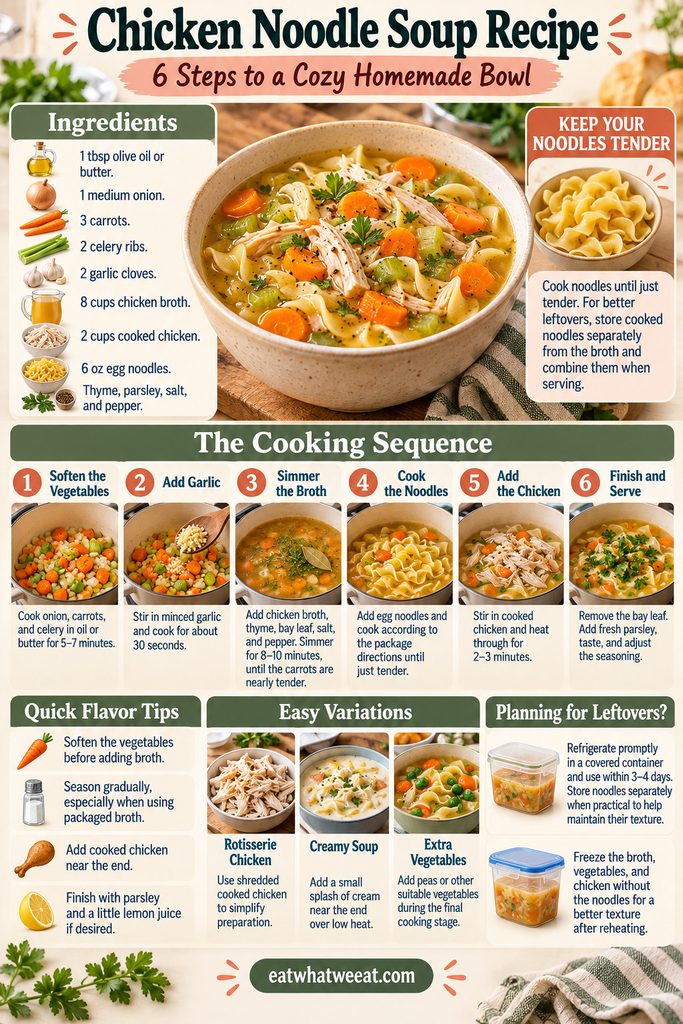
- 1 tablespoon olive oil or unsalted butter
- 1 medium yellow onion, diced
- 3 medium carrots, peeled and sliced
- 2 celery ribs, sliced
- 2 garlic cloves, minced
- 8 cups (2 quarts) chicken broth or stock, preferably lower sodium
- 1 bay leaf
- ½ teaspoon dried thyme
- 2 cups cooked chicken, shredded or diced
- 6 ounces wide egg noodles (or another quick-cooking noodle)
- ½ teaspoon kosher salt, plus more to taste
- ¼ teaspoon black pepper, plus more to taste
- 2 tablespoons chopped fresh parsley
- Optional: 1–2 teaspoons lemon juice
How to Make Chicken Noodle Soup
- Soften the vegetables. Heat the oil or butter in a large soup pot over medium heat. Add onion, carrots, and celery. Cook for 5–7 minutes, stirring occasionally, until the onion begins to soften.
- Add the aromatics. Stir in garlic and cook for about 30 seconds, just until fragrant.
- Simmer the broth. Pour in the chicken broth. Add the bay leaf, thyme, salt, and pepper. Bring to a gentle boil, then reduce the heat and simmer for 8–10 minutes, or until the carrots are nearly tender.
- Cook the noodles. Add the egg noodles and simmer according to the package directions, usually until just tender. Stir occasionally so they do not stick together.
- Warm the chicken. Stir in the cooked chicken and simmer gently for 2–3 minutes, until heated through. Avoid prolonged boiling, which can make shredded chicken dry.
- Finish and taste. Remove the bay leaf. Stir in parsley and, if you like a brighter flavor, a little lemon juice. Taste and adjust salt and pepper before serving.
Small Details That Make a Better Bowl
Build flavor before adding the broth
Give the onion, carrots, and celery a few minutes in the pot before adding liquid. This softens them and creates a more rounded base than simply boiling everything together from the start.
Add noodles at the right time
Noodles continue absorbing liquid as they sit. Cook them just until tender if you plan to serve the soup right away. For leftovers, the most reliable texture comes from storing noodles separately and adding them to each bowl.
Season in layers
Start with a modest amount of salt, especially when using packaged broth or rotisserie chicken. Thyme, parsley, black pepper, and a small squeeze of lemon can add character without overwhelming the classic flavor.
Easy Ways to Customize It
- Rotisserie chicken: Replace the home-cooked chicken with about 2 cups of shredded rotisserie chicken and add it near the end.
- More vegetables: Add peas, corn, or finely chopped spinach during the last few minutes.
- Extra herbs: Use a little fresh dill or thyme alongside parsley.
- Gluten-free option: Choose a gluten-free noodle and check that the broth and other packaged ingredients are labeled gluten-free. Cook the noodles separately if they soften quickly.
- Creamy variation: For a richer soup, stir in a small splash of cream near the end over low heat. This changes the recipe from a clear broth to a creamy style.
- More lemon: Add lemon juice a little at a time just before serving for a fresher finish.
Common Mistakes to Avoid
- Overcooking noodles: Follow the package timing and check them early.
- Adding cooked chicken too soon: It only needs to warm through, so add it near the end.
- Using too much salt at the beginning: Broth reduces slightly as it simmers and different brands vary in sodium.
- Skipping the final taste: Parsley, pepper, or a little lemon added at the end can bring the flavors into balance.
- Storing noodles in all the broth: They may swell and absorb liquid. Keep them separate for better leftovers when possible.
Storage, Freezing, and Reheating
Let leftover soup cool promptly, then refrigerate it in a covered container and use within 3–4 days. Reheat on the stove until steaming hot, adding a splash of broth or water if the noodles have absorbed liquid.
For better freezer texture, freeze the broth, vegetables, and chicken without the noodles. Thaw in the refrigerator, reheat until hot, and cook fresh noodles separately before combining. If freezing soup that already contains noodles, expect a softer texture after thawing.
Quick Recipe Checklist
- Dice the onion and cut carrots and celery into similar-sized pieces.
- Use cooked chicken for a faster weeknight version.
- Soften the vegetables before adding broth.
- Add garlic after the vegetables have begun to soften.
- Simmer the broth with thyme and a bay leaf.
- Wait until the vegetables are nearly tender before adding noodles.
- Check noodle doneness before the package’s maximum cook time.
- Add cooked chicken near the end.
- Remove the bay leaf before serving.
- Taste before adding more salt.
- Use parsley for a fresh finish.
- Add lemon juice gradually if you want brightness.
- Keep extra broth nearby for reheating.
- Store noodles separately when practical.
- Label freezer portions with the date.
Frequently Asked Questions
Can I use rotisserie chicken?
Yes. Shred about 2 cups of cooked rotisserie chicken and stir it in during the last few minutes, just long enough to heat through.
How do I keep the noodles from getting mushy?
Cook them only until just tender and avoid leaving them in the broth for long storage. For the best leftover texture, keep cooked noodles in a separate container.
Can I make chicken noodle soup ahead?
Yes. Make the broth, vegetables, and chicken ahead, then cook and add the noodles shortly before serving. This keeps the noodles from absorbing too much liquid.
Can I make it in a slow cooker?
You can cook the broth, vegetables, and raw chicken in a slow cooker until the chicken is cooked through and tender. Add noodles near the end, following their package timing. If using cooked rotisserie chicken, add it later so it only needs to warm up.
What can I serve with chicken noodle soup?
Crusty bread, crackers, a grilled cheese sandwich, or a simple green salad all work well. Choose something easy that complements the warm, savory broth.
Keep this classic chicken noodle soup recipe in your weeknight rotation and adapt it with the chicken, vegetables, and herbs you have available. A few simple timing choices—especially adding noodles and cooked chicken near the end—help keep each bowl comforting and full of texture.
Chicken Noodle Soup Ideas to Save for Later
Explore these visual approaches to classic broth, quick shortcuts, creamy variations, ingredient prep, and make-ahead serving ideas. Each image links to the source page listed in the PinInspector export, with a separate credit to the original Pinterest pin.
Classic Golden Broth Bowl

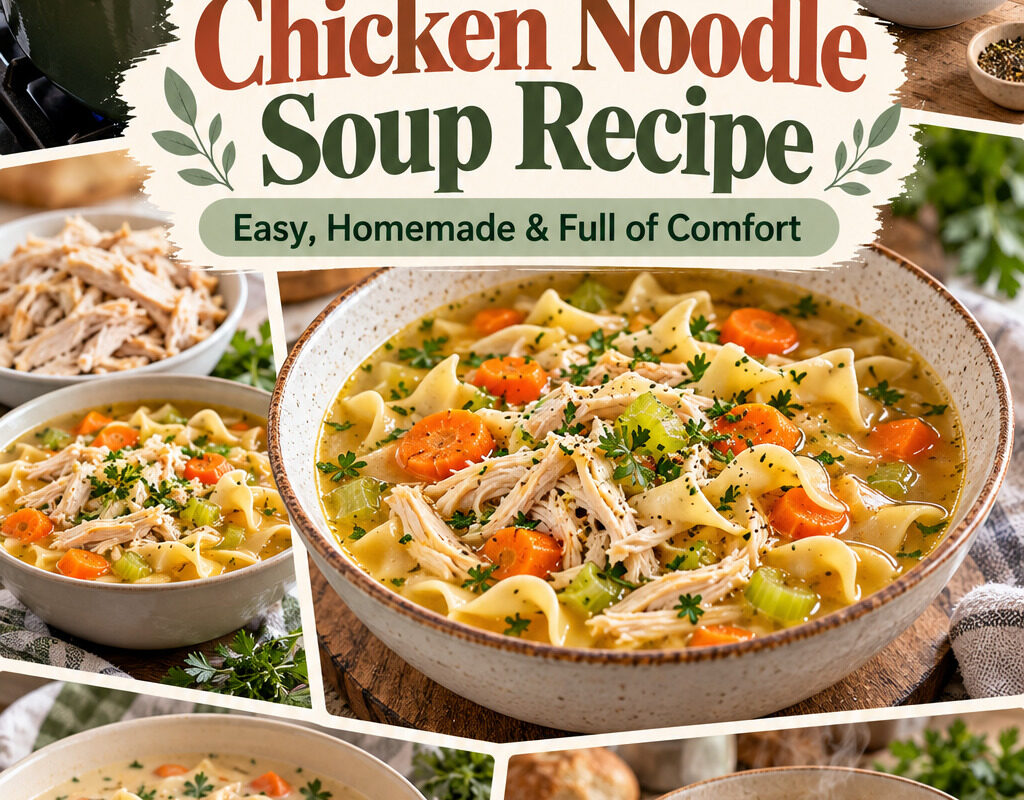
A clear golden broth with tender chicken, curly egg noodles, carrots, and celery is the familiar starting point for a dependable homemade bowl.
This style keeps the ingredient list simple and lets the broth, aromatics, and chicken do the work. It is a flexible baseline for lunch or a low-fuss family dinner.
Use wide egg noodles for a nostalgic feel, or swap in small pasta shapes. Finish with parsley and black pepper just before serving.
Rotisserie Chicken Shortcut

Shredded rotisserie chicken makes a practical shortcut when you want homemade-style soup without cooking raw chicken first.
Because the chicken is already cooked, it only needs to warm through near the end. That keeps the meat tender while reducing active prep.
Sauté the vegetables first, simmer them in broth until almost tender, then add shredded chicken and noodles. Check the seasoning because store-bought chicken can already be salty.
Colorful Vegetable Base

Orange carrot slices, pale celery, and softened onion bring color and an aromatic foundation to chicken noodle soup.
Cutting the vegetables into similarly sized pieces helps them cook at a more even pace and gives every spoonful a balanced mix.
Add extra celery for a more savory flavor or a handful of peas near the end for a little sweetness. Keep pieces bite-sized so the soup is easy to eat.
Simple Homestyle Bowl

A simple bowl combines chicken, noodles, and vegetables in a light, savory broth without complicated ingredients.
This familiar format works well when you want a flexible recipe that can use pantry staples and leftover cooked chicken.
Taste the broth before serving and adjust with salt, pepper, and fresh herbs. If the flavor feels flat, a small squeeze of lemon can brighten it.
Creamy Variation

A creamy version has a more velvety, opaque broth while keeping the chicken, noodles, and vegetables at the center.
Cream adds body and makes the soup feel more substantial, but it changes the texture from a classic clear broth.
Stir in a splash of cream near the end over low heat. For a lighter finish, use a modest amount and avoid boiling vigorously after adding dairy.
Hearty Chicken Pieces

Tender chicken pieces sit among noodles and vegetables in a hearty bowl designed to feel like a complete meal.
Using a mix of shredded chicken and small chunks creates varied texture without making the soup difficult to spoon.
Poach chicken gently in the broth or use pre-cooked chicken. Shred or dice it into bite-size pieces, removing any bones or cartilage before serving.
Homemade From-Scratch Style

A from-scratch approach starts with aromatics and broth, then adds vegetables, chicken, and noodles in stages.
Layering ingredients gives the broth time to pick up savory flavor while helping vegetables and noodles keep their texture.
Let onion, carrot, and celery soften before adding broth. Add noodles only when the broth is simmering and cook them until just tender.
Classic Family Recipe

A generous bowl of chicken noodle soup with visible noodles and vegetables feels familiar and inviting.
This style is easy to scale for a family meal and pairs well with toast, crackers, or a simple green salad.
Set out chopped parsley, cracked pepper, and lemon wedges so everyone can customize their bowl at the table.
Fresh Herb Finish

Fresh green herbs and a little black pepper give a classic soup a fresh finish against the warm broth and pale noodles.
Herbs are a small final detail that can make a pot taste brighter without changing the core recipe.
Stir in chopped parsley after turning off the heat. If using dill or thyme, start with a small amount so it complements rather than dominates the broth.
Comforting Broth Focus

This presentation highlights the broth around the chicken and noodles, making the soup look especially inviting on a cool day.
A flavorful broth is the foundation of the dish; vegetables, herbs, and a gentle simmer help create depth without a long ingredient list.
Use low-sodium broth if you want more control over salt, then season gradually. A bay leaf during simmering can add subtle background flavor; remove it before serving.
From-Scratch Texture

Noodles, shredded chicken, and soft vegetables create the varied textures that make homemade chicken noodle soup satisfying.
Cooking the components to the right tenderness matters as much as the ingredient list: noodles should be soft but not falling apart.
If you expect leftovers, cook noodles separately and add them to each bowl. This helps prevent them from soaking up too much broth in storage.
Ginger-Free Classic Comfort

A straightforward chicken noodle soup can be served when you want something warm and easy to eat, with no elaborate garnish required.
Its appeal comes from familiar ingredients and a gentle savory flavor, not from any promise to treat illness.
For a lighter bowl, skim excess fat from the surface and use a well-seasoned broth. Describe it as comfort food rather than a remedy for colds.
Rustic Homemade Bowl

A rustic bowl shows the soup as it might look straight from a family pot: generous noodles, chicken, and vegetables in broth.
The relaxed presentation suits everyday meals and reminds readers that soup does not need elaborate styling to be appealing.
Serve in warmed bowls and add herbs at the last moment. Keep a little extra hot broth nearby in case noodles absorb liquid before serving.
Quick 30-Minute Approach

A quick version relies on small-cut vegetables, thin noodles, and already-cooked chicken to keep the cooking process moving.
It is useful for busy evenings when you want a warm meal without a long simmer, though timing depends on chopping speed and noodle type.
Prep the vegetables before heating the pot. Simmer until they are nearly tender, add noodles, and fold in cooked chicken just long enough to heat through.
Minimal Styling, Big Comfort

A clean, uncluttered bowl puts the golden broth, chicken, and noodles front and center.
This is a useful reminder that the best everyday recipe is one that is easy to serve and adapt, not one that requires special presentation.
Pair it with crusty bread or crackers. Add lemon or parsley at the table for a small finishing touch that suits individual tastes.
Slow Cooker Adaptation

A slow-cooker approach brings chicken and vegetables together with broth for a convenient meal that can be prepared ahead.
It suits days when you prefer hands-off cooking, but noodles are best added toward the end so they do not become overly soft.
Cook the chicken and vegetables in broth until tender, then add noodles near the end according to their package timing. If using cooked rotisserie chicken, add it later to warm through.
Easy Homemade Bowl

A straightforward homemade bowl uses chicken broth, noodles, chicken, and common soup vegetables in a familiar combination.
The recipe is adaptable to what is already in the refrigerator, making it practical for weeknight meal planning.
Use leftover cooked chicken, frozen carrots or peas if needed, and the noodle shape you have on hand. Adjust the broth amount if your noodles absorb more liquid.
Traditional Serving Idea

A classic serving combines broth, noodles, chicken, and vegetables in a bowl that looks inviting without extra toppings.
Keeping the components recognizable makes this style approachable for adults and kids who prefer familiar flavors.
For small children, cut chicken and vegetables into age-appropriate bite-size pieces and let the soup cool to a safe eating temperature.
Creamy Noodle Soup

This variation emphasizes a creamy broth surrounding chicken and noodles, creating a thicker alternative to the clear classic.
It offers a different texture for readers who prefer richer soups while retaining the familiar chicken-noodle combination.
For a smooth result, add dairy gradually over low heat. Do not let the soup boil hard once cream has been added.
Golden Classic With Herbs

A golden broth with visible vegetables and herbs gives the classic recipe a warm, homemade appearance.
The appeal is its balance: a savory base, tender chicken, soft vegetables, and noodles that make each spoonful substantial.
Use thyme during simmering and parsley at the end. Remove woody herb stems before ladling the soup into bowls.
Comfort in a Bowl

A full bowl of chicken noodle soup combines tender chicken and noodles with carrots and celery in a savory broth.
It is an easy main dish to serve with bread or a sandwich, especially when the meal needs to be simple and filling.
Make the broth a little more concentrated if you plan to add lots of noodles, and keep extra broth available to loosen leftovers.
Batch-Cooking Friendly

A homemade pot can be portioned for later meals, with broth and chicken ready to reheat when needed.
Planning ahead can make a future lunch or dinner easier. Noodles, however, tend to soften as they sit in liquid.
For best texture, store cooked noodles separately from the broth when possible. Refrigerate promptly in shallow containers and reheat until steaming hot.
Quick Homemade Style

A fast soup uses familiar ingredients and a short cooking sequence to get a comforting bowl on the table sooner.
Small vegetable cuts and quick-cooking noodles help reduce the time needed for the pot to finish.
Use cooked chicken for the biggest time savings. Keep the simmer gentle and begin checking noodles a minute or two before the package time.
Ingredient Prep Guide

Carrots, celery, onion, noodles, chicken, broth, and herbs form a practical prep lineup for classic chicken noodle soup.
Gathering ingredients before the pot heats makes the cooking sequence easier and helps prevent overcooked noodles while you search for seasonings.
Measure broth and noodles first, chop vegetables into even pieces, and have cooked chicken ready. Keep salt adjustable until the broth has simmered.
Scratch-Made Soup

A scratch-made bowl features tender chicken, noodles, vegetables, and a broth that is seasoned in layers as it cooks.
This approach gives the cook control over salt, texture, and the balance of herbs, while remaining based on everyday ingredients.
Use chicken stock or broth as your base, soften aromatics first, and add noodles late. Finish with parsley and taste before adding more salt.
Find more comforting homemade recipes, practical cooking tips, and weeknight meal inspiration by following @eatwhatweeatrecipes on Pinterest.